


Easy SEO guide for busy business persons
An easy to understand SEO guide for busy business persons.
Written By: Atta Ur Rehman Akbar
1. Some Motivating Stats:
- Top Traffic Source (HubSpot Report)
- The below stats show the traffic that comes from Organic, Direct, and Referral in combine more then any other channel. That is the reason SEO is important.
- Nearly one-fourth (22%) of web professionals surveyed in 2022 said direct traffic was their top source.
- Traffic portion by Display Ads (12%), Paid Search (9%), Referral (9%), Other (%1).
- Following direct was organic search (17%), social (16%) and email (14%)”. Source.

- Top Ranking Positions Earned Clicks (Backlinko Report)
- Top ranking positions see the most clicks: Studies consistently show that the top positions on search engine results pages (SERPs) garner the majority of clicks. Backlinko reports that the first result on Google receives 31.9% of clicks, emphasizing the importance of ranking highly for relevant keywords. Source.

- Top ranking positions see the most clicks: Studies consistently show that the top positions on search engine results pages (SERPs) garner the majority of clicks. Backlinko reports that the first result on Google receives 31.9% of clicks, emphasizing the importance of ranking highly for relevant keywords. Source.
- Leads source with most close-rate (HubSpot Report)
- SEO leads are more likely to convert: Compared to other marketing channels, leads generated through organic search tend to have a higher conversion rate.
- HubSpot: States that leads from SEO have a 14.6% close rate, compared to 1.7% for outbound leads. Source.

- HubSpot: States that leads from SEO have a 14.6% close rate, compared to 1.7% for outbound leads. Source.
- SEO leads are more likely to convert: Compared to other marketing channels, leads generated through organic search tend to have a higher conversion rate.


2. What is SEO?
- Simple Definition: Getting your website found in search engine results for terms relevant to your business.
- For Example: If you are running a Barber shop, in Faisalabad, and someone search in Google “Barber shop near me” or “Best Barber shop in Faisalabad”, and your website comes in top 5 results. then you will get more clicks as compare the the below results. This happens because of SEO.
- Benefits: More website traffic, leads, and customers without paying for ads.
3. How SEO works?
- A. Think like your customers: What would they type into Search Engines to find a business like yours? The are called “Keywords”, what they type to search in for something relevant to your business.
- Example: “Printing Company in Faisalabad”.

- Example: “Printing Company in Faisalabad”.
- B. Target relevant keywords: Include these keywords strategically in your website content and titles. Choose only keywords with a monthly Search Volume of more than 70.
- Example: “Town Crier printing company in Faisalabad”.
- C. Create valuable content: Informative blog posts, product descriptions, and “about us” sections attract visitors and establish your expertise.
- D. Optimize website for mobile browsing: Many searches happen on phones, so make sure your website is mobile-friendly.
- E. Get mentioned online by others: Talk to other blog writers and get a link from their website to your website. Also, posting on social media with a link to your website will help you get traffic.


4. Sections/Parts of SEO:
- Off-page SEO:
Getting good recommendations from other websites. These websites can be business directories, blogs news websites, or even social media. - Technical SEO:
Making sure the website is secure, speedy, and mobile responsive. Further, there are two more important files, Robots.txt and sitemap.xml. We have mentioned about them briefly in the Important Terms section
On-Page SEO:
It’s all about making a website page so rich with relevant keywords, so that the search engine can easily match it and hopefully show it when someone search the relevant keywords on search engine (Google, Bing, etc).
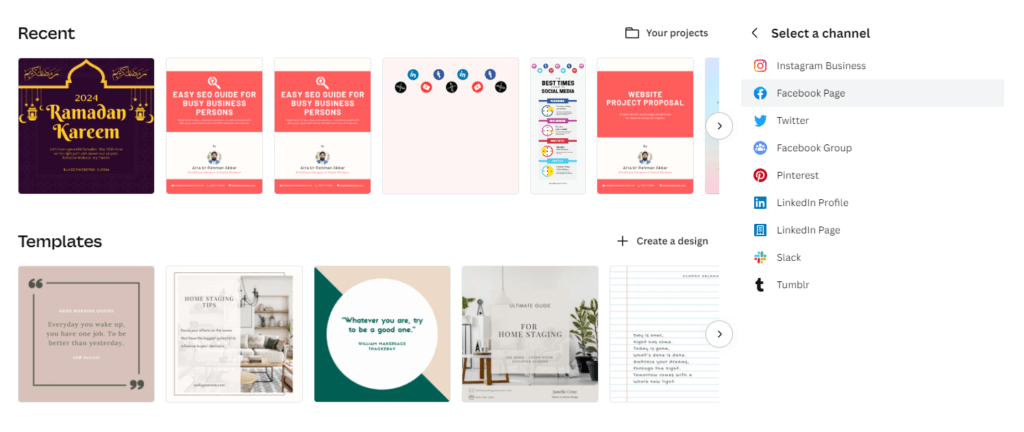
Different types of social media posts:
The most important tool needed in social media management is the Post scheduler.
Okay, that’s enough, I think going into more details is out of the scope of this eBook.
5. How you can measure the results?
Well, simply ask the following questions to your social media manager.
- How many followers do you have this week?
- What kind of content is getting the most views?
- What are the audience demographics who are visiting your social channel?
- Are the audience engaged with content, how many Impressions, comments, reactions, and reposts do you have this week?
6. Selecting the team (Size and Skills):
We have already written a detailed blog post on “Why and how to digitalize your business” where we have mentioned the size and skill set of teams according to the size of the organization.
6. Glossary:
Social Media General Terms:
- Analytics: Data that helps you understand how your social media content is performing. This can include metrics like engagement, reach, and clicks.
- Audience: The people you’re trying to reach with your social media content.
- Bio: A short description of yourself or your brand on a social media profile. Also available on your business pages for every social media.
- Call to Action (CTA): A statement/button that tells users what you want them to do after seeing your content, such as “Click here to learn more” or “Shop now.”
- Content Curation: Finding and sharing relevant content from other sources.
- Engagement: The interaction your content receives, such as likes, comments, and shares.
- Hashtag (#): A word or phrase preceded by a # symbol used to categorize content and make it discoverable. These tags help your post to get more views.
- Impression: The number of times your content is displayed on a user’s screen. One person can view your post multiple times. Mostly the Impression Frequency is 1.5 to 2.
- Key Performance Indicator (KPI): A measurable value that demonstrates how effectively you’re achieving your social media goals. For instance, Followers, engagement, and Impressions.
Community Management Terms:
- Community Manager: The person responsible for building and managing relationships with your audience on social media.
- Direct Message (DM): A private message sent between two users on a social media platform.
- Engagement Rate: A metric that shows how well your content is resonating with your audience. It’s typically calculated by dividing the total number of engagements (likes, comments, shares) by the number of impressions and multiplying by 100.
Content Creation Terms:
- Content Marketing: Creating and sharing valuable content to attract and retain an audience.
- Evergreen Content: Content that remains relevant and valuable over time.
- Story: Short, disappearing video or photo content on platforms like Instagram and Facebook.